


Why Is Tripollar Gel Essential for RF Devices?
Radiofrequency devices are becoming more common in professional and at-home skincare routines. Grand View Research identifies facial rejuvenation as a major application within the radiofrequency devices market. Its analysis also highlights growing demand for non-invasive treatments with limited downtime. Yet device performance depends on more than electrical output. Skin contact matters.
This is where tripollar gel becomes essential. The gel creates a smooth, conductive layer between the applicator and the skin. It helps the device glide across the cheek, jawline, and forehead without uncomfortable pulling. It may also reduce uneven contact, which can produce inconsistent heating. A dry surface can feel hot in small areas. That detail is easy to overlook.
Dermatologist and RF treatment specialist Dr. Michael H. Gold emphasizes a practical principle: controlled contact supports safer, more consistent energy delivery. The American Society for Dermatologic Surgery also reports continued consumer interest in non-invasive skin procedures, although outcomes vary by device, technique, and user adherence. The gel is not magic. It cannot replace correct settings, movement, or professional guidance.
Research remains uneven across consumer RF products. Some claims appear stronger than the available evidence. That deserves caution. A suitable tripollar gel should remain evenly spread, feel comfortable, and follow the manufacturer’s instructions. Think of it as a small bridge between technology and skin. Without that bridge, advanced RF energy may not perform as consistently as intended.
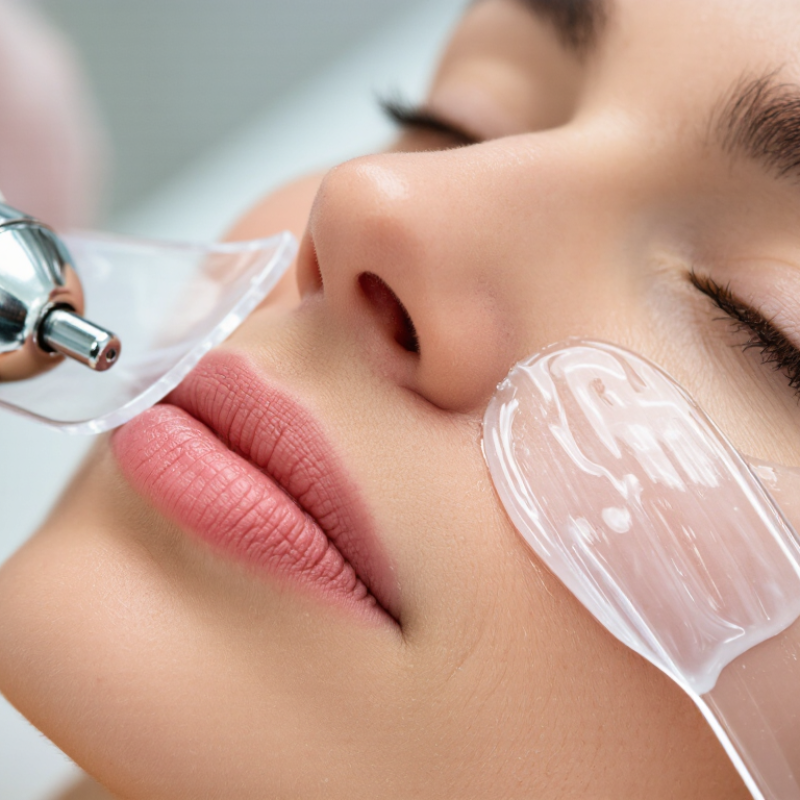
RF Energy Transfer at 1 MHz: Why Conductive Gel Matters
Why Is Tripollar Gel Essential for RF Devices?
At 1 MHz, radiofrequency energy moves through tissue according to electrical impedance, contact quality, and tissue moisture. A conductive gel fills tiny air gaps between the electrode and skin. This creates a more even electrical pathway and helps reduce localized resistance. Without sufficient gel, energy may concentrate around dry spots, causing uncomfortable heat or uneven treatment. It does not magically increase RF power.
The International Commission on Non-Ionizing Radiation Protection published RF exposure guidance in 2020, emphasizing controlled fields, accurate equipment, and safe contact conditions. Meanwhile, the U.S. FDA’s 2023 device guidance stresses performance testing, temperature control, and user instructions for energy-based aesthetic equipment. These references do not prove that every gel performs equally. They show why the coupling medium deserves attention. In practical use, a thin, continuous layer matters more than a thick puddle. The skin should feel cool and slippery, not flooded. Conductivity can also change with formulation, storage, and skin hydration. That detail is easy to overlook. Some users may apply too little gel, then blame the device for patchy warmth. Others may assume more gel means better transfer. It may not. A controlled application, clean electrode, and steady movement remain essential at 1 MHz. Even this advice needs testing against the device’s instructions and measured skin temperature.
Why Is Tripollar Gel Essential for RF Devices? — RF Energy Transfer at 1 MHz: Why Conductive Gel Matters
Practical factors that influence radio-frequency energy transfer, surface contact, comfort, and treatment consistency.
| Data Dimension | Relevant Fact or Typical Condition | Why Conductive Gel Matters | Practical Check |
|---|---|---|---|
| Operating frequency | Many aesthetic RF systems operate at radio frequencies such as 1 MHz. The applied energy is delivered through an electrode–skin interface. | Gel helps maintain continuous electrical contact between the applicator and the skin instead of relying on irregular dry contact. | Confirm the device frequency and application method in the manufacturer’s instructions. |
| Air-gap reduction | Air is a poor electrical conductor compared with water-based coupling media and living tissue. Small gaps can occur because of skin texture, hair, or uneven pressure. | A uniform gel layer fills microscopic gaps and reduces localized contact irregularities. | Apply an even, continuous layer; do not allow the applicator to glide over dry skin. |
| Electrical coupling | Water-based conductive gels commonly contain dissolved electrolytes that support ionic conduction at the skin surface. | Improved surface coupling can help the RF generator transfer energy more consistently under normal operating conditions. | Use a gel intended for the specific RF device rather than an oil-based product. |
| Contact impedance | Skin impedance varies with hydration, pressure, temperature, electrode area, and contact quality. | Gel hydration and even coverage can reduce abrupt changes in contact impedance during movement. | Keep pressure and movement speed as consistent as possible throughout treatment. |
| Energy distribution | Uneven contact may concentrate current density or electric-field intensity at small interface regions. | More uniform contact supports smoother energy distribution and may reduce hot spots caused by poor coupling. | Inspect the skin regularly and stop if excessive heat, sharp discomfort, or unusual redness occurs. |
| Thermal behavior | RF treatment produces heat in tissue; the actual temperature depends on power, treatment time, electrode design, tissue properties, and cooling. | Gel can improve contact and may assist surface glide, but it does not replace temperature control or safety monitoring. | Use the device’s recommended motion, duration, intensity, and temperature limits. |
| Applicator movement | Continuous movement is commonly used in cosmetic RF procedures to distribute exposure over the treatment area. | Gel reduces friction and helps the applicator maintain contact while moving across the skin. | Keep the applicator moving as directed; avoid holding it stationary unless the instructions specifically allow it. |
| Product compatibility | Oil-based creams and products with insulating ingredients may not provide the intended conductive interface. | A compatible water-based gel is less likely to interfere with electrode contact than an insulating topical product. | Check the product label for water-based, conductive, non-abrasive, and device-compatible properties. |
| Treatment consistency | Drying, uneven application, and repeated passes over areas with insufficient gel can change the interface during a session. | Reapplying gel when needed helps preserve consistent contact from the beginning to the end of treatment. | Refresh the gel if it dries, becomes patchy, or no longer allows smooth applicator movement. |
| Safety limitations | Conductive gel does not make RF treatment safe for every person or body area and does not eliminate risks from excessive heat. | Gel is a coupling medium, not a substitute for screening, correct settings, or professional guidance. | Follow all contraindications and avoid use over areas or with implanted devices restricted by the instructions. |
Key takeaway: Conductive gel supports a stable applicator–skin interface, but it does not increase the device’s rated RF power or guarantee a particular treatment result. Correct settings, continuous movement, temperature awareness, and the device instructions remain essential.
The values and explanations above describe general RF coupling principles; actual performance depends on the device design, electrode geometry, gel formulation, skin condition, and operating settings.
Related Posts
-
What is Lumenis RF Microneedling and How Does It Work?
-
How to Buy Tripollar Stop VX Gold in 2026?
-

Top 10 TriPollar STOP X Types Buyers Should Know
-
Why Choose Oxygeneo Machine for Your Skincare Needs?
-

Top 10 Benefits of Legend Pro Lumenis for Global Buyers?
-

Top Benefits of RF Microneedling for Skin Rejuvenation and Tightening?


