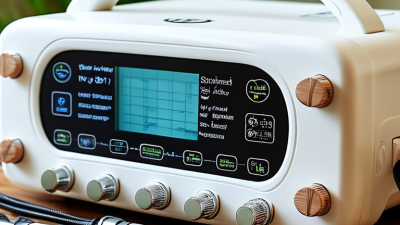
Top 10 TriPollar Radiofrequency Machines for Global Buyers
Choosing among the top 10 TriPollar radiofrequency machines requires more than comparing prices or polished product images. Global buyers need evidence, safety documentation, practical performance, and reliable after-sales support. This introduction examines how each device approaches tripollar radiofrequency energy, skin contact, temperature control, treatment depth, and user comfort. It also considers regional voltage, warranty coverage, replacement parts, and certification requirements. A beautiful console means little if a distributor cannot explain maintenance procedures.
Dr. Yoram Harth, a recognized cosmetic dermatology specialist, has stated, “Controlled energy matters more than maximum heat.” That principle guides this comparison. Effective radiofrequency treatment should feel warm and controlled, not painfully hot. Cooling systems, contact sensors, adjustable intensity, and clear treatment protocols deserve close attention. Real clinics also notice smaller details, such as handpiece weight, cable flexibility, and whether the display remains readable beside a treatment bed. These details affect consistency.
No ranking can promise identical outcomes for every skin type, operator, or market. That limitation matters. Some devices may offer impressive power but require stronger training and stricter supervision. Others may feel easier to operate yet provide fewer customization options. We compare specifications with realistic use, not advertising language alone. Buyers should still verify local regulations, electrical compatibility, clinical guidance, and supplier credentials before purchasing. The strongest machine is not always the most expensive one. It is the model that combines controlled performance, transparent documentation, dependable service, and a sensible fit for its intended users.
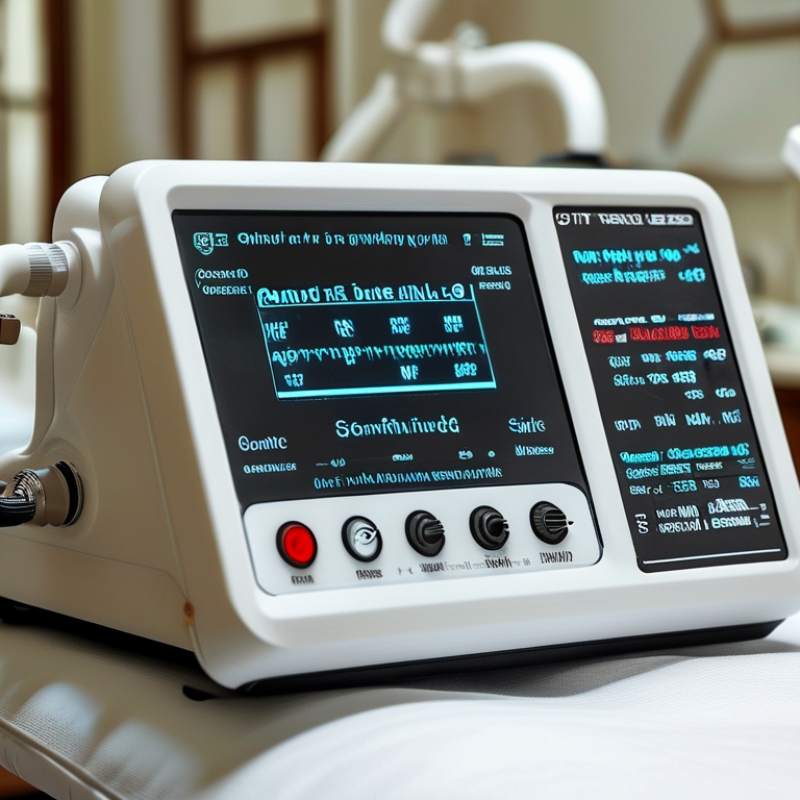
TriPollar RF Fundamentals: Three Poles, 0.5–2 MHz, and Thermal Control
TriPollar radiofrequency machines use three electrodes to distribute energy across the treatment area. Current travels between the poles, creating controlled heat in the skin and underlying tissue. The three-pole layout can support more even coverage than a single contact point. However, electrode spacing and skin contact matter greatly.
A 0.5–2 MHz frequency range gives operators flexibility during treatment. Lower frequencies may interact differently with tissue than higher frequencies, but frequency alone does not determine performance. Power, impedance, movement speed, and applicator design also influence heating. Experienced users monitor skin temperature continuously. They should never rely on sensation alone.
Thermal control is the practical safeguard. Sensors, automatic power adjustment, and clear temperature limits can help prevent excessive heating. A useful machine should display temperature changes quickly, not hide them behind vague settings. Treatment records should include duration, energy level, skin response, and operator observations. This supports consistent evaluation across users.
There is no perfect setting.
Even with careful control, results can vary with hydration, tissue thickness, and technique. Buyers should review independent testing, electrical certifications, maintenance support, and training requirements. A polished interface is helpful, but it cannot replace clinical judgment or documented safety procedures.
Performance Metrics: 40–42°C Skin Targets, Power Density, and Treatment Time
For global buyers, TriPollar radiofrequency machines should be judged by measured skin temperature, power density, and treatment time. A 40–42°C surface target is commonly used in clinical RF protocols because it supports controlled dermal heating without excessive discomfort. However, temperature readings vary with probe location, pressure, hydration, and cooling. A neat number is not proof of performance.
Peer-reviewed reports in Dermatologic Surgery and Lasers in Surgery and Medicine describe treatment sessions commonly lasting 10–30 minutes per facial area. Many studies also use repeated sessions rather than one aggressive procedure. Power density deserves closer attention. Wattage alone can mislead buyers; a device should disclose energy delivery in W/cm², electrode configuration, and temperature-control accuracy. Independent testing is valuable. Some specifications remain surprisingly vague. That deserves questioning.
Tips: Ask for temperature logs, not promotional claims. Compare delivered energy per square centimetre. Check whether treatment time is measured per zone or for the whole face. Request safety testing aligned with IEC 60601 requirements. Skin response also matters. A device reaching 42°C too quickly may feel harsh, while a slower system may provide more even heating. Professional operators should document settings, cooling intervals, and client feedback after each session. These details make international comparisons more reliable, although published studies still use different protocols.
Safety and Compliance: IEC 60601-1, ISO 13485, FDA 510(k), and EU MDR
When comparing professional radiofrequency machines, safety claims need document-level verification. IEC 60601-1 addresses basic electrical safety and essential performance, including insulation, leakage current, and abnormal operation. Ask for the current test report, model number, accessories, and applicable national deviations. A generic certificate is not enough.
ISO 13485 shows that the manufacturer operates a medical-device quality system. It does not prove that one machine is clinically effective. For the United States, FDA 510(k) clearance generally demonstrates substantial equivalence to a legally marketed device; it is not the same as FDA approval. Check the cleared indication, energy settings, and intended treatment area.
Under the EU MDR, buyers should review CE conformity evidence, risk management, clinical evaluation, technical documentation, and post-market surveillance arrangements. The authorized representative and notified-body details should match the supplied model.
Details matter. A missing applicator in the safety report can create an uncomfortable gap. So can software revisions, changed treatment tips, or unclear labeling. Request serial-number traceability, user training records, maintenance procedures, and adverse-event reporting contacts. These steps reflect real procurement practice, not paperwork theater. Still, compliance files can be incomplete or difficult to interpret, even when the equipment appears polished. Independent regulatory review is wise for hospitals, distributors, and clinics serving multiple countries.
Global Buyer Scorecard: Energy Delivery, Cooling, Warranty, and 100–240 V
Global demand for aesthetic devices is rising with the wider wellness economy. The Global Wellness Institute’s 2024 Monitor valued this economy at $6.3 trillion in 2023. Yet market growth does not guarantee reliable equipment. Buyers should score radiofrequency machines by measured performance, not polished photographs.
Energy delivery needs documented frequency, output range, treatment area, and impedance control. Ask for test data from an accredited laboratory, preferably referencing IEC 60601-1 safety requirements. A display showing “high power” proves little. Cooling deserves equal attention. Look for contact-temperature limits, sensor feedback, and recovery time between pulses. A 2024 report from the International Electrotechnical Commission highlights the importance of risk-based electrical safety in medical equipment. Still, compliance does not automatically prove comfortable treatment. That distinction is easy to miss.
For global purchasing, 100–240 V input is practical, but it must include the correct 50/60 Hz range and approved plug options. Confirm whether the device switches voltage automatically. A replacement fuse or adapter should be locally obtainable. Warranty scoring should include duration, parts coverage, repair location, and written response times. Two years sounds strong until shipping costs sit outside the policy. The Global Wellness Institute reports rapid international sector expansion, but service networks remain uneven. I would deduct points when sellers provide only a generic warranty PDF. One weakness remains: laboratory figures may not represent daily clinic use. Request a demonstration log, temperature records, and maintenance history before payment.
Top 10 Selection Framework: Clinical Evidence, Cost per Session, and ROI
For global buyers, comparing the top ten tri-polar radiofrequency machines requires more than reading output claims. Clinical evidence should lead the shortlist. Look for peer-reviewed studies, clearly described treatment settings, follow-up periods, and measurable outcomes. A small study may show promising skin tightening, yet it cannot predict every clinic’s results. Patient skin type, treatment area, operator skill, and maintenance schedules change the picture. Evidence matters most when the device’s settings resemble real practice.
Calculate cost per session before discussing return on investment. Include purchase price, shipping, import charges, training, consumables, servicing, and room time. Divide the realistic five-year ownership cost by expected paid sessions, not theoretical capacity. For example, a machine used for eight sessions weekly has a different break-even point from one used twice daily. Add staff wages and electricity. Costs vary. Small omissions become expensive.
ROI should combine revenue, client retention, safety, and downtime. Ask whether documented protocols support consistent sessions and whether local regulators permit the intended use. Request service response times, warranty terms, calibration records, and adverse-event reporting procedures. A polished demonstration is useful, but it is not clinical proof. My own selection bias is easy to miss: attractive interfaces can outweigh stronger evidence. Recheck the spreadsheet after a pilot month. Some assumptions may be wrong.
Top 10 TriPollar Radiofrequency Machines for Global Buyers — Top 10 Selection Framework: Clinical Evidence, Cost per Session, and ROI
| Rank | Anonymized Machine Profile | Typical RF Configuration | Common Treatment Use | Evidence for RF Modality | Clinical Evidence Score (0–5) |
Typical Purchase Range (USD) |
Consumable Cost per Session |
Suggested Client Price per Session |
Estimated Gross Profit per Session |
Break-even Sessions | Estimated Monthly ROI (80 Sessions) |
Global-Buyer Considerations |
|---|---|---|---|---|---|---|---|---|---|---|---|---|
| 1 | Profile A — Premium Multi-Polar Platform | Multi-polar RF; temperature feedback; facial and body handpieces | Facial tightening, skin texture improvement, localized body contouring | High RF skin-rejuvenation mechanisms and thermal-control principles are well represented in peer-reviewed literature. |
4.5 / 5 | $18,000–$28,000 | $3–$8 | $120–$220 | $112–$217 | 83–250 | $8,960–$17,360 gross contribution | Best suited to established clinics; confirm local electrical certification, operator training, warranty coverage, and service response times. |
| 2 | Profile B — Clinical Facial RF System | Tri-polar or multi-polar RF; facial applicator; contact-temperature monitoring | Fine lines, mild laxity, facial contour support | High Good alignment with clinical studies on non-invasive RF for facial laxity and collagen remodeling. |
4.3 / 5 | $10,000–$18,000 | $2–$6 | $90–$160 | $84–$158 | 63–215 | $6,720–$12,640 gross contribution | Strong fit for dermatology and aesthetic practices; confirm whether treatment tips are reusable, replaceable, or subject to licensing restrictions. |
| 3 | Profile C — Dual-Handpiece Facial and Body Unit | Multi-polar RF; separate facial and body applicators; adjustable power levels | Facial rejuvenation and small-area body treatments | High Versatile configuration supports protocols commonly described in RF aesthetic literature. |
4.1 / 5 | $8,000–$15,000 | $2–$7 | $80–$150 | $73–$148 | 54–205 | $5,840–$11,840 gross contribution | Balanced option for medium-sized clinics; assess handpiece replacement pricing and availability of multilingual operating manuals. |
| 4 | Profile D — Compact Professional RF Platform | Tri-polar RF; one facial handpiece; basic thermal feedback | Facial tightening and maintenance treatments | Moderate–High Underlying modality is supported, but device-specific clinical documentation may be limited. |
3.9 / 5 | $5,000–$10,000 | $1–$5 | $60–$120 | $55–$119 | 42–182 | $4,400–$9,520 gross contribution | Attractive for smaller practices; verify output stability, calibration intervals, treatment-time limits, and distributor support. |
| 5 | Profile E — Modular Facial RF System | Multi-polar RF; interchangeable facial tips; digital treatment timer | Skin texture, mild wrinkles, facial maintenance | Moderate–High Clinical plausibility is strong, but buyer should request machine-specific before-and-after data. |
3.8 / 5 | $6,000–$12,000 | $2–$6 | $70–$130 | $64–$128 | 47–188 | $5,120–$10,240 gross contribution | Useful where facial services dominate; evaluate software language options, consumable lead times, and local import documentation. |
| 6 | Profile F — Entry Clinical Tri-Polar Unit | Tri-polar RF; manual intensity control; facial applicator | Basic facial tightening and skin-conditioning services | Moderate Evidence supports RF generally; device-specific controls and dose reporting require careful validation. |
3.5 / 5 | $3,500–$7,000 | $1–$4 | $50–$100 | $46–$99 | 36–152 | $3,680–$7,920 gross contribution | Suitable for lower-capital entry; insist on electrical safety testing, documented contraindications, and formal operator training. |
| 7 | Profile G — Portable Clinic RF Device | Multi-polar RF; compact console; limited treatment-area coverage | Facial maintenance, small treatment zones, mobile services | Moderate Portable form factor does not itself establish clinical efficacy; validate energy delivery and temperature control. |
3.3 / 5 | $2,500–$6,000 | $1–$4 | $45–$90 | $41–$89 | 29–146 | $3,280–$7,120 gross contribution | Good for limited-space practices; check battery or mains requirements, transport protection, cleaning procedures, and regional plug compatibility. |
| 8 | Profile H — Body-Focused RF Platform | Multi-polar RF; larger body applicator; basic contact-temperature display | Localized body contour support and skin-firming programs | Moderate Body-treatment outcomes vary with protocol, tissue thickness, heating consistency, and patient selection. |
3.2 / 5 | $7,000–$14,000 | $2–$8 | $90–$180 | $82–$178 | 79–171 | $6,560–$14,240 gross contribution | Higher revenue potential but longer appointment times; calculate therapist utilization, room occupancy, and local advertising costs. |
| 9 | Profile I — Salon-Grade RF System | Tri-polar RF; simplified controls; single-purpose facial handpiece | Cosmetic facial maintenance and non-medical beauty services | Limited–Moderate May rely primarily on general RF literature and supplier documentation rather than independent trials. |
2.9 / 5 | $1,500–$4,000 | $1–$3 | $30–$70 | $27–$69 | 22–148 | $2,160–$5,520 gross contribution | Check whether the product is approved for professional use in the target market and whether advertised claims comply with local regulations. |
| 10 | Profile J — Budget Multi-Polar Starter Unit | Multi-polar RF; manual settings; minimal diagnostic feedback | Entry-level facial services and introductory treatment packages | Limited Require independent verification of RF output, thermal safety, contraindications, and treatment consistency. |
2.6 / 5 | $800–$2,500 | $1–$3 | $25–$55 | $22–$54 | 15–114 | $1,760–$4,320 gross contribution | Lowest capital requirement; do not purchase without verified electrical safety certification, traceable specifications, warranty terms, and local technical support. |
Evidence interpretation: The clinical evidence score reflects the strength of evidence for non-invasive aesthetic RF principles and the expected value of device-specific documentation. It is not a claim that every anonymized profile has been independently validated. Buyers should request regulatory certificates, electrical safety reports, output specifications, temperature-control records, published clinical data, warranty terms, and post-sale service commitments before purchase.
Related Posts
-
7 Best Tripolar RF Machines for Global Buyers?
-
10 Best Radiofrequency Facial Treatments for Youthful Skin?
-
2026 Best Tripollar Stop VX Reviews and Benefits for Skincare
-

Top 5 Tripollar Radiofrequency Tips for Best Results?
-
Top 10 TriPollar STOP X Types Buyers Should Know
-
Top Radio Frequency Machine Options for 2026 Buyers?