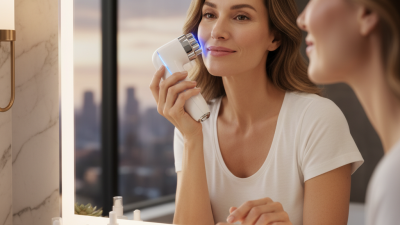
5 Tripollar Stop VX Buying Tips for Global Buyers
Global buyers are showing stronger interest in at-home beauty technology, but enthusiasm should not replace careful evaluation. Grand View Research reports continued growth in the home-use beauty devices market, driven by convenience, lower long-term costs, and personal treatment routines. Yet growth also creates confusion. Many listings use identical photographs, unclear specifications, or unusually low prices.
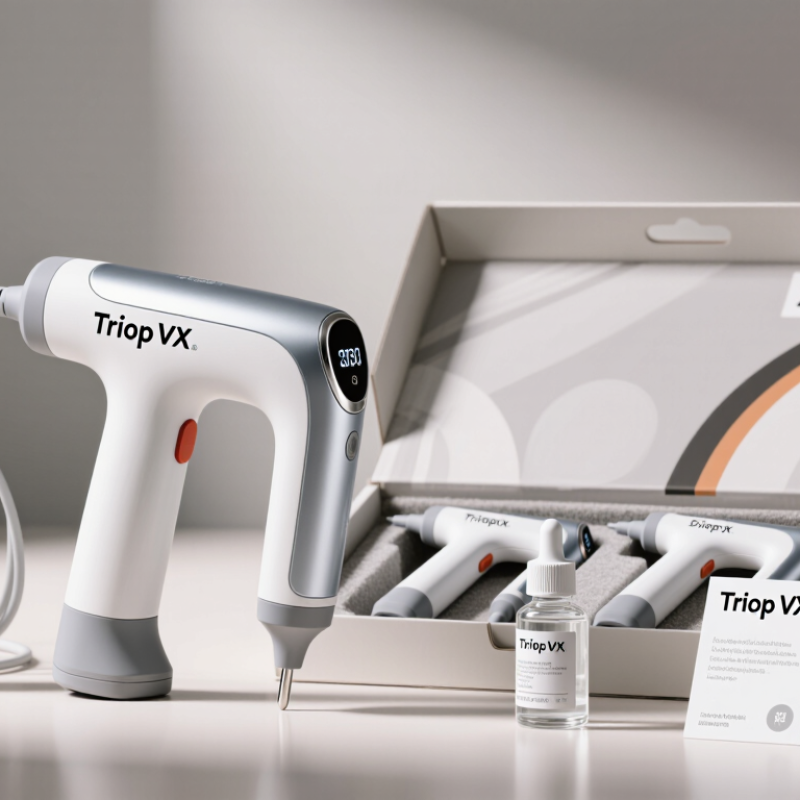
The tripollar stop vx uses radiofrequency technology, so buyers should examine the seller, regional voltage, warranty coverage, and return conditions before paying. Check whether the package includes the original charger, conductive gel, instructions, and serial information. A genuine-looking box is not enough. Product authentication matters.
Dermatologist Dr. Joshua Zeichner has emphasized, “At-home devices are not a substitute for professional treatments.” That reminder is practical, especially for buyers expecting dramatic changes after one session. Consistency matters more than exaggerated promises. The American Academy of Dermatology also advises consumers to follow device instructions and consult qualified professionals when skin conditions or sensitivities are present.
This guide offers five buying tips for international customers comparing the tripollar stop vx. It considers pricing, authenticity, regional support, safety information, and realistic results. Some details may vary by country. That is easy to overlook. Taxes, customs charges, and unavailable replacement accessories can change the real purchase cost considerably.
A careful buyer should photograph the listing, confirm the model, and request written warranty terms. Small checks prevent expensive mistakes. Even experienced shoppers can miss them.
Define STOP VX’s RF technology, modes, and 1 MHz operating specification
5 Tripollar Stop VX Buying Tips for Global Buyers
When assessing the STOP VX device, begin with its radio-frequency technology. RF energy sends controlled electromagnetic waves through the skin. The stated 1 MHz operating frequency means one million cycles per second. It describes frequency, not total power, heat, or guaranteed penetration. That distinction matters. I would not judge performance from “1 MHz” alone. Look for clear output controls, temperature feedback, electrode design, and contact sensors. These details show whether the device manages energy consistently during home use.
Review the available modes carefully. A standard RF mode generally supports facial warming and collagen-focused care. Some versions may include a stronger lifting or muscle-stimulation setting, depending on regional configuration. Confirm the exact mode names in the local manual. Check whether intensity changes automatically or manually. Skin contact should feel warm, never sharply painful. Stop if irritation continues. Buyers should also verify treatment duration, charging requirements, warranty coverage, and authorized service access. One overlooked issue is usability: a technically capable device may still disappoint if its head is difficult to keep flat against the cheek or jawline. Results also vary with skin condition, technique, and treatment consistency. That is easy to forget. A careful buyer compares verified specifications, safety guidance, and independent user experience rather than relying on dramatic claims.
5 Tripollar STOP VX Buying Tips for Global Buyers
STOP VX uses bipolar radio-frequency energy with a 1 MHz operating frequency. Its treatment modes are designed to adjust delivery intensity and comfort, while the RF carrier frequency remains unchanged.
A 1 MHz carrier is the stated operating specification. Do not treat frequency alone as a guarantee of treatment results.
Sensitive, Normal, and Intensive modes are intended to provide different comfort and energy-delivery levels.
Look for contact sensing, thermal monitoring, and clear instructions for safe skin temperature management.
Confirm whether the electrode design and approved usage instructions are suitable for the face, eye area, or body.
Before purchasing, verify voltage compatibility, included adapters, warranty coverage, and regional safety documentation.
Chart note: all three treatment modes use the same 1 MHz RF carrier specification; the mode selection changes the intended delivery profile rather than the carrier frequency.
Verify IEC 60601-1 safety compliance and ISO 13485 manufacturer credentials
When evaluating a home-use aesthetic device, safety paperwork deserves more attention than polished images. Ask the supplier for a current IEC 60601-1 test report, certificate, and certification-body details. IEC 60601-1 addresses basic safety and essential performance for medical electrical equipment. It does not automatically prove every regional approval. Check the exact model number, electrical rating, accessories, and report date. A certificate for a similar device is not enough. Not even close.
Look for practical evidence. The report should identify tested risks, including leakage current, insulation, temperature, and mechanical hazards. Confirm that the laboratory is appropriately accredited and that the document can be verified independently. Request English originals, not cropped screenshots. Compare the serial label with the submitted model. Small mismatches can signal poor document control. Buyers often trust a logo before checking its scope. That habit is understandable, but expensive.
The manufacturer should also hold a valid ISO 13485 certificate for its medical-device quality management system. Check the legal manufacturer name, certified sites, product scope, and expiry date. Ask how design changes, complaints, calibration, and corrective actions are recorded. A real quality system leaves a paper trail. Request a sample declaration, inspection record, and batch traceability example. These checks take time. They may still miss hidden weaknesses. Yet they create a more defensible purchasing decision for distributors and clinics serving different markets.
| Tip | Key Buying Dimension | What to Verify | Acceptable Evidence | Global Buyer Checkpoint | Potential Red Flag |
|---|---|---|---|---|---|
| 1 | Electrical safety compliance | Confirm that the applicable product configuration has been assessed against IEC 60601-1, which defines general requirements for the basic safety and essential performance of medical electrical equipment. | A complete test report or certificate identifying the exact model, electrical ratings, product configuration, applicable edition, testing laboratory, and date of issue. | Match the model number, accessories, power supply, and intended use shown in the evidence with the units being purchased. | A general “CE,” “FDA,” or “IEC approved” statement without a traceable report or certificate. |
| 2 | Manufacturer quality-management credentials | Check whether the legal manufacturer operates a quality-management system certified to ISO 13485 for medical devices. | A current ISO 13485 certificate showing the certificate holder, manufacturing or design sites, certification scope, certificate number, issuing certification body, and expiry date. | Verify the certificate directly through the issuing certification body or its public certificate database where available. | An expired certificate, a scope that excludes the relevant product activity, or a certificate issued only to a distributor rather than the legal manufacturer. |
| 3 | Electromagnetic compatibility and usability | For electrically powered medical equipment, review testing relevant to IEC 60601-1-2 for electromagnetic compatibility. Where applicable, also request usability-engineering evidence aligned with IEC 62366-1. | EMC test results covering emissions and immunity, defined operating conditions, and any applicable usability or human-factors documentation. | Confirm that the test setup reflects the intended environment, such as a professional clinic, home-use setting, or other specified location. | No information about electromagnetic interference, operating environment, contraindications, or required separation from other equipment. |
| 4 | Regulatory readiness in the destination market | Determine the device classification, importer or responsible-person requirements, labeling rules, language requirements, registration obligations, and post-market duties in each target market. | A market-specific regulatory checklist, declaration of conformity where applicable, technical documentation index, compliant labeling samples, and instructions for use in the required language. | Ask who will act as the importer or authorized representative and confirm that the documentation names the correct legal manufacturer and product model. | A seller promises worldwide legality without identifying the destination-market pathway or responsible regulatory party. |
| 5 | Traceability, warranty, and after-sales support | Evaluate serial-number control, batch or lot traceability, inspection records, warranty terms, repair procedures, spare-part availability, and complaint-handling arrangements. | A sample device label, quality-control or release record, written warranty, service-level terms, replacement-part list, and documented return or complaint process. | Include document delivery, acceptance testing, defect reporting, response times, and recall or safety-notice communication in the purchase contract. | No serial-number system, unclear warranty exclusions, unavailable replacement parts, or support limited to informal messaging. |
Assess treatment claims against professional RF temperature data of 40–42°C
Global buyers should judge RF beauty devices by measurable performance, not polished treatment promises. Professional RF protocols often target about 40–42°C at the skin surface, although the suitable range depends on the area, applicator, and treatment duration. Ask whether this temperature was measured with a calibrated infrared camera or contact probe. A pleasant warm feeling is useful feedback, but it is not reliable evidence.
Check how evenly the device maintains heat. A single peak reading can hide cooler edges or sudden spikes. Request test data showing temperature changes during a complete session, including the first five minutes. Confirm the treatment area, recommended duration, and contact method. Small applicators may require more passes. That affects both comfort and real-world results.
Examine the evidence behind claims. Look for controlled testing, clear participant numbers, and photographs taken under similar lighting. Marketing language can become vague. Heat is not proof. Also review electrical specifications, regional plug compatibility, safety instructions, warranty terms, and service access before purchasing internationally. Ask whether the seller provides user training and replacement parts. I would not rely on skin sensation alone, especially for users with reduced sensitivity. One practical mistake is assuming a higher setting means better treatment. It may instead create uneven heating. A careful buyer should compare documented 40–42°C performance with independent testing, then consider whether the device’s controls are simple enough for consistent use.
Compare total ownership costs using 2024 VAT, duties, and shipping rates
For global buyers, the sticker price is only the starting point. A €300 device with €35 shipping may become much more expensive after import charges. The European Commission’s 2024 Taxes in Europe database lists standard VAT rates from 17% to 27% across EU countries. Germany applies 19%, while Hungary applies 27%. Import VAT usually covers the product, shipping, insurance, and customs duty.
Tip: Build a landed-cost worksheet before ordering. Add product price, shipping, insurance, duty, VAT, brokerage, and possible currency fees. The WTO World Tariff Profiles 2024 confirms that duty rates depend on the product’s HS classification and destination. Do not assume a zero-duty result. Classification mistakes happen.
Shipping also needs careful checking. The 2024 Pitney Bowes Parcel Shipping Index shows significant differences in parcel costs between markets and service levels. Compare tracked economy, express, and delivered-duty-paid quotes.
For example, a €300 purchase with €35 shipping and 5% duty could face about €66.65 in German VAT, before brokerage fees. The estimated landed cost becomes roughly €418.40. My first calculation was too optimistic.
For business buyers, VAT recovery may reduce the final cost, but eligibility depends on registration and local rules. Consumers usually cannot reclaim it. Exchange-rate spreads can quietly add another 2% to 5%. Check the customs invoice, not only the checkout page.
Check warranty terms, regional voltage, plug standards, and service coverage
When buying a home-use facial device internationally, read the warranty before comparing prices. Check the coverage period, repair conditions, and excluded damage. Some warranties reject products damaged by incorrect voltage or unauthorized repairs. Keep the invoice, serial number, and unboxing photos. They may become essential later.
Voltage deserves careful attention. A plug adapter only changes the plug shape; it does not convert electrical voltage. Confirm the device’s input range, frequency, and included plug type for your country. A model designed for 110V may not operate safely on a 220–240V outlet. Check the label and manual, not only the online listing. Small details matter.
Service coverage can determine the real cost of ownership. Ask whether local repair centers exist, who pays return shipping, and how long inspections usually take. Confirm support languages and available replacement parts. A low price may become expensive after international postage and customs delays. I once treated “global warranty” as complete protection, but that phrase can hide regional limits. Written confirmation is better than assumptions. Also, verify whether the seller is authorized to provide after-sales support. Reliable sellers should answer specific questions clearly, even when the answer is inconvenient.
Related Posts
-
2026 Best Tripollar Stop VX Reviews and Benefits for Skincare
-

Is Tripollar Stop VX Gold the Best Anti-Aging Device for You?
-
How to Get the Best Results from Oxygeneo Facial Treatment?
-

How to Achieve Smooth Skin with Radiofrequency Facial Treatments?
-
Top Radio Frequency Machine Options for 2026 Buyers?
-
Why Choose Oxygeneo Machine for Your Skincare Needs?