
10 Tips for Buying an 808 Nm Diode Laser
Buying an 808 Nm Diode Laser is not simply a matter of choosing the highest power or lowest price. The right system must match the intended application, operator experience, treatment area, and working environment. A device that performs well in a laboratory may feel impractical in a busy clinic. Details matter, including pulse control, spot size, cooling efficiency, handpiece design, and maintenance access.
Dr. Steven L. Jacques, a respected laser-tissue interaction researcher, offers a useful principle: “The wavelength is only one part of the treatment equation.” That reminder should guide every purchasing decision. An 808 Nm Diode Laser can provide consistent energy delivery, but performance depends on calibrated output, suitable fluence, stable cooling, and responsible operation. Buyers should also examine supplier documentation, warranty terms, training support, electrical safety, and relevant product certifications. Marketing claims can sound convincing. Measured evidence is better.
This guide presents ten practical tips for comparing systems with greater confidence. It considers technical specifications, treatment comfort, portability, software controls, replacement costs, and after-sales service. It also explains why identical-looking machines may produce different user experiences. A cheaper unit may save money initially. It may also create unexpected repair costs later.
Some assumptions deserve reconsideration. More power does not automatically mean better results. A larger display does not prove stronger engineering. Careful questions usually reveal more than polished brochures. By evaluating the laser’s complete design, buyers can reduce avoidable risks and choose equipment that supports safe, repeatable, and professionally managed work.
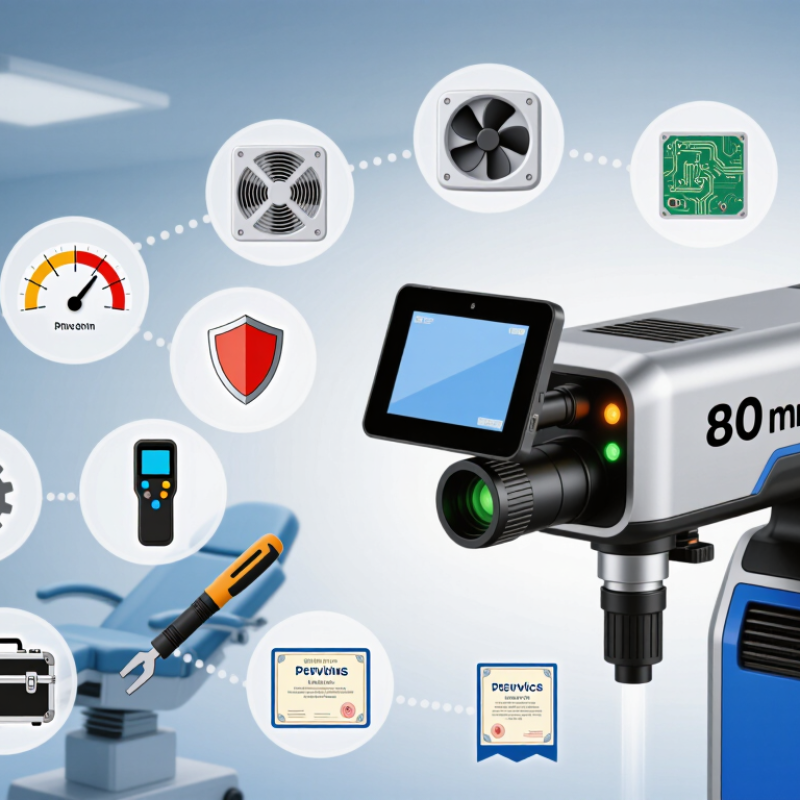
Understanding 808 nm Diode Laser Technology and Applications
An 808 nm diode laser produces near-infrared light from semiconductor materials. At this wavelength, light can interact with melanin, converting absorbed energy into heat. That is why some systems are designed for hair reduction. The wavelength alone does not determine performance. Fluence, pulse duration, spot size, and cooling all affect how energy reaches the target. Details matter.
Start by matching the device to its intended application. Systems for hair reduction are not interchangeable with low-level light therapy or industrial uses; their output and safety controls differ. Check whether the stated power is measured at the treatment surface, not only inside the device. Ask for clear specifications on pulse settings, spot size, cooling, and operating limits. Not just wattage. A large number on a brochure can sound impressive, but it tells little without those details.
For hair reduction, results vary with hair color, skin tone, treatment area, and operating settings. Very light hair may respond poorly because it contains less melanin. Look for built-in contact or temperature safeguards, clear instructions, and appropriate eye protection for the device’s wavelength. Confirm who is qualified to operate it and what training is provided. A spec sheet can feel reassuring; I would still question vague test methods and missing service details. The details can be messy.

Defining Your Treatment or Industrial Requirements
Before comparing an 808 nm diode laser, define the job it must perform. For treatment settings, document the intended procedure, treatment area, session pace, and required spot size. A clinician should assess suitable parameters for each patient; wavelength alone does not predict results. Keep records of the settings used. Small differences matter.
For industrial work, name the material, thickness, process, and target throughput. Test how the material responds at the intended operating conditions, rather than assuming a listed power rating guarantees performance. Check output stability, beam shape, duty cycle, and cooling needs. A laser that runs well for brief tests may struggle during a full shift. Ask for measurement data and stated tolerances, not just headline specifications.
Also map out the real workspace: available power, ventilation, mounting space, and operator training. Confirm that protective eyewear, shielding, and safety interlocks suit the system and its use. Consider maintenance access, replacement parts, and the supplier’s technical documentation. Maximum output can look attractive on paper, but it may not fit your workflow. I would leave room for uncertainty: early trials can reveal that the preferred spot size, speed, or cooling method needs revision. Define acceptance tests before purchase, including repeatability and performance after sustained operation.
Evaluating Laser Output, Cooling, and Control Specifications
When evaluating an 808 nm diode laser, compare optical output at the workpiece, not electrical input power. Ask for measured output at a stated drive current, operating temperature, and duty cycle. A headline wattage without test conditions is hard to interpret. Check wavelength tolerance and beam divergence, too; these affect whether the laser suits your optical setup.
Cooling changes performance. RP Photonics’ diode-laser technical reference notes that emission wavelength typically shifts by about 0.25 nm per °C, though the exact coefficient depends on the device. That is enough to make temperature control relevant when wavelength precision matters. Look for specified thermal resistance, a compatible heat sink, and temperature feedback. A small fan may sound adequate, but room temperature and airflow can change the result.
Control specifications deserve the same scrutiny. Confirm the driver’s current range, ripple, stability, and modulation response, then request test data rather than relying on adjectives such as “stable.” A thermistor reading is useful, but it does not directly measure junction temperature. Ask how the value was validated. Check whether output remains consistent after warm-up; this detail is easy to overlook.
10 Tips for Buying an 808 Nm Diode Laser - Evaluating Laser Output, Cooling, and Control Specifications
| # | Evaluation Area | What to Check | Practical Buying Tip |
|---|---|---|---|
| 1 | Wavelength | Confirm that the specified center wavelength is 808 nm and check the allowed wavelength tolerance and measurement conditions. | Request wavelength data at the intended operating temperature and drive current. Diode wavelength can shift with temperature and operating conditions. |
| 2 | Optical Output Power | Distinguish rated optical output from electrical input power, and identify whether the rating is continuous-wave (CW) or pulsed. | Specify the required power at the delivery point, such as the laser aperture or fiber output. Ask for a test report with measurement conditions and instrument calibration details. |
| 3 | Power Stability | Check the stated output-power stability, measurement duration, warm-up time, and ambient or coolant conditions. | Set an application-specific acceptance limit and test method in the purchase specification; stability figures are meaningful only when the test conditions are stated. |
| 4 | Beam and Delivery Optics | Review beam dimensions, divergence, fast- and slow-axis behavior, pointing, and any fiber-core diameter and numerical aperture (NA). | Match the specified beam or fiber parameters to the optical system. Ask whether values are measured at the output facet, after collimation, or at the fiber end. |
| 5 | Cooling Requirements | Check whether the laser requires air or liquid cooling, along with coolant type, temperature range, flow rate, pressure, and heat-rejection requirements. | Use the manufacturer’s specified coolant and operating limits. Cooling capacity must account for waste heat, not just the laser’s optical output power. |
| 6 | Temperature Control | Confirm the operating-temperature range, temperature-sensor type, set-point control, and any over-temperature protection. | Ask how temperature is monitored and how a fault is reported. Stable temperature supports repeatable operation but does not by itself guarantee a particular wavelength or power stability. |
| 7 | Drive Current and Electrical Limits | Check the required driver type, operating-current range, maximum current, voltage compliance, polarity, and connector pinout. | Use a compatible laser-diode driver with current limiting and appropriate transient protection. Do not exceed the specified operating limits. |
| 8 | Control and Modulation | Verify supported control inputs, modulation method, response requirements, and any digital interface or status signals. | Confirm voltage levels, connector wiring, and interface protocol before integration. For pulsed operation, check pulse width, repetition rate, and duty-cycle limits separately. |
| 9 | Protection and Interlocks | Check for safeguards such as an enable input, interlock connection, over-temperature or over-current protection, and fault indication. | Assess the complete laser system against applicable laser-safety requirements, including IEC 60825-1 where relevant. An interlock does not replace suitable enclosure, labeling, and operating procedures. |
| 10 | Reliability and Documentation | Review the rated operating conditions, lifetime definition, warranty, acceptance-test procedure, and available technical documentation. | Request a datasheet, mechanical drawing, electrical pinout, cooling instructions, and test records. Compare lifetime claims only when the definition and operating conditions are clear. |
Specifications vary by diode-laser configuration. Treat the checks above as a purchasing guide and verify all limits against the exact model’s technical documentation.
Checking Safety Features, Certifications, and Service Support
10 Tips for Buying an 808 Nm Diode Laser
An 808 nm beam is near-infrared and may be invisible, so never judge safety by brightness alone. Check the device’s accessible-emission classification, interlocks, emergency stop, and protective eyewear rating for the actual wavelength and power. IEC 60825-1:2014 defines seven laser classes, including subclasses; ask the seller for the classification report, not just a label. Paperwork matters.
For medical equipment, review applicable IEC 60601 safety documentation and the manufacturer’s ISO 13485 quality-system evidence. These standards address different things: product safety and manufacturing controls. Confirm that certificates identify the exact model and manufacturer, and verify them with the issuing body where possible. A polished PDF can still leave questions. I would check whether test results cover the supplied configuration, including its handpiece and cooling unit.
Service support deserves equal scrutiny. Request written warranty terms, response-time targets, spare-parts availability, and instructions for calibration and maintenance. Ask who performs repairs and whether output measurements are recorded after servicing. Keep a sample service log in mind: date, measured power, operating hours, and technician. The details are not glamorous, but they matter when output drifts. Also request a clear procedure for reporting faults; vague promises of “lifetime support” are difficult to rely on.
10 Tips for Buying an 808 nm Diode Laser: Safety, Certifications, and Service
Suggested buyer-priority ratings on a 1–5 scale, not measured product data. Verify laser classification and labeling against IEC 60825-1; for medical electrical equipment, check which IEC 60601 requirements and local regulatory approvals apply. Because 808 nm light is invisible, confirm wavelength-matched protective eyewear and safeguards such as interlocks and an emergency stop.
Comparing Suppliers, Total Costs, and Purchase Terms
Buying an 808 nm diode laser requires more than comparing the quoted unit price. MarketsandMarkets’ 2024 laser technology analysis forecasts steady mid-single-digit market growth through 2029, increasing supplier options and price variation. Tip 1: Request wavelength tolerance, output-power stability, and beam-divergence data. Tip 2: Compare test reports from identical operating conditions. Tip 3: Check whether cooling hardware, optics, drivers, and safety interlocks are included. A low quote may exclude essential parts.
Total cost matters. Grand View Research identifies industrial processing as a major laser technology demand segment, where downtime and integration expenses can exceed the original component price. Tip 4: Add freight, taxes, installation, calibration, and spare emitters. Tip 5: Ask for a five-year maintenance estimate. Tip 6: Calculate the cost of one production-day delay. Tip 7: Compare electrical efficiency and cooling demand, not only optical output. Small differences become expensive in continuous operation. I have seen buyers overlook connector changes. That mistake is frustrating.
Purchase terms deserve equal attention. Tip 8: Confirm lead time in writing, including production and inspection days. Tip 9: Negotiate acceptance testing using power, wavelength, and thermal limits. Tip 10: Clarify warranty coverage, replacement timing, payment milestones, and technical support. IEC 60825-1 provides a recognized framework for laser safety classification, but supplier documentation still needs careful review. Compare at least three suppliers using one specification sheet. Keep the evaluation imperfect but transparent; unverified assumptions should be marked, not hidden.
