
7 Fractional RF Buying Tips for Global Buyers?
Buying fractional RF equipment across borders requires more than comparing prices on a supplier’s website. The term fractional rf may describe different technologies, treatment depths, and energy controls. Global buyers should define the intended application before requesting quotations. Record the frequency range, output power, pulse settings, handpiece design, cooling method, and expected treatment area. Small specification gaps can create large operational problems.
A reliable supplier should provide a complete technical datasheet, user manual, warranty terms, and current test documentation. Ask for serial-number traceability and production quality records where appropriate. Confirm whether the manufacturer follows recognized quality systems, such as ISO 13485, when applicable. Independent performance testing can reveal details that marketing materials hide. Connector types, voltage requirements, software languages, and replacement-part availability also deserve attention. They are easy to overlook.
Compliance is not identical in every market. Import classification, labeling, electrical safety, radio-frequency requirements, and medical-device rules may differ by destination. Buyers should verify requirements with competent local advisers and the relevant authorities. Do not rely on a copied certificate. Check its issuing body, scope, expiry date, and product model. Payment terms and Incoterms matter too, especially when equipment needs installation or service support. A low quote may become expensive after freight, training, customs, and calibration.
No checklist is perfect. Still, disciplined comparison reduces avoidable risk. The following seven fractional RF buying tips focus on evidence, supplier accountability, total ownership cost, and practical suitability for global purchasing decisions. Some recommendations may seem obvious. They are often missed.
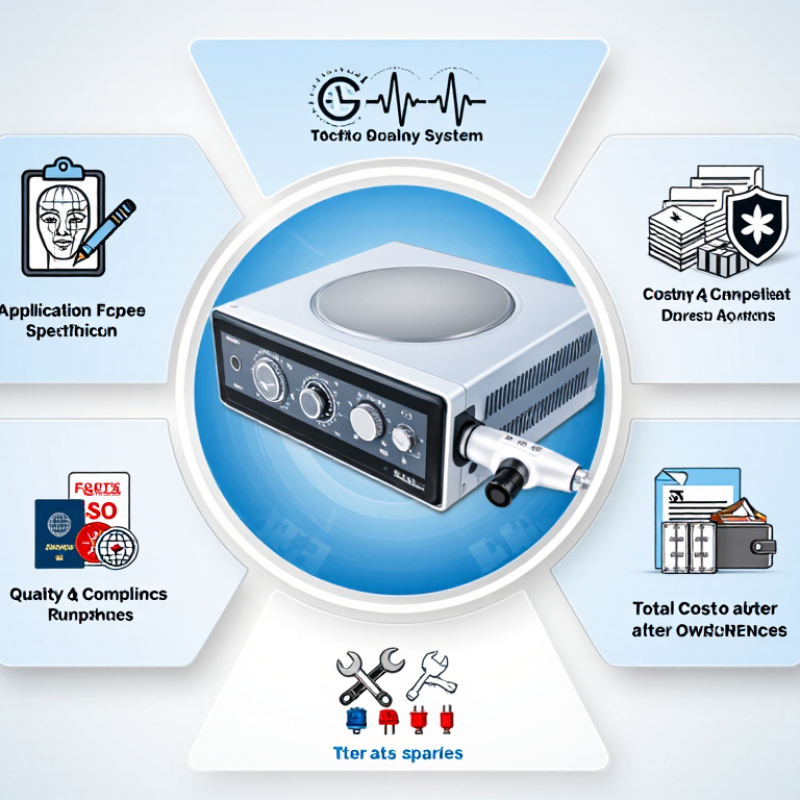
Understanding Fractional RF and Its Global Applications
7 Fractional RF Buying Tips for Global Buyers
Understanding Fractional RF and Its Global Applications
Fractional radiofrequency uses controlled energy to heat selected skin areas. It creates tiny treatment zones while leaving surrounding tissue less affected. In clinical practice, providers may use it for uneven texture, acne scars, enlarged pores, or mild laxity. Results vary. Skin type, needle depth, energy settings, and aftercare all matter.
Global buyers should examine the device’s intended applications, technical documents, and regional compliance requirements. Do not rely on a sales brochure alone. Ask for training records, maintenance procedures, electrical specifications, and evidence supporting each claimed use. A device designed for one market may need different documentation elsewhere. Local authorities may also require facility registration or practitioner qualifications.
Look closely at treatment cartridges and contact materials. Consistent needle placement and reliable energy delivery affect operator control. Small details matter, such as clear displays, adjustable settings, and simple cleaning steps. They matter more in busy clinics. Service availability can differ sharply between countries. Confirm spare-part access, response times, language support, and warranty terms before purchasing.
Temperature, humidity, and voltage can affect daily operation. Test compatibility with the intended clinic environment. I have seen buyers focus on purchase price and overlook staff training costs. That is an expensive lesson. Patient screening, informed consent, and documented aftercare should remain part of the purchasing decision, not an afterthought. No device replaces professional judgment.
Defining Frequency, Power, and Performance Requirements
7 Fractional RF Buying Tips for Global Buyers
Defining Frequency, Power, and Performance Requirements
Global RF purchasing starts with the operating band, not the product label. Confirm the exact downlink and uplink frequencies, channel bandwidth, duplexing method, and regional allocation. The ITU-R M.2410 report uses 20 Gbit/s downlink and 10 Gbit/s uplink as IMT-2020 peak targets, but these are network-level benchmarks, not device guarantees. Ask for measured results at your intended frequency.
Power needs equal more than maximum output. Specify conducted power, radiated power, gain, duty cycle, and supply voltage. A 1-watt specification may describe a peak value, while your application needs stable continuous operation. Check EIRP limits in each target market. Regional rules can change the acceptable antenna gain or amplifier setting. Small details matter.
Performance should include noise figure, phase noise, linearity, frequency error, spurious emissions, and thermal drift. The 3GPP TS 38.104 specification defines measurable transmitter and receiver requirements for cellular equipment. Use its test language when comparing supplier reports. Request data across temperature, voltage, and production samples. One laboratory result is not enough.
Build a verification sample. Test it with your antenna, cable length, enclosure, and power supply. That is where optimistic assumptions often fail. A neat spreadsheet can still mislead. Also confirm calibration intervals, test fixtures, certificates, export documentation, and local support. Buyers sometimes overvalue peak power and undervalue frequency stability. That mistake is expensive.
7 Fractional RF Buying Tips for Global Buyers: Defining Frequency, Power, and Performance Requirements
Frequency selection affects wavelength, matching-network design, electrode or coil dimensions, and regional compliance. The values below show internationally recognized ISM frequencies and their approximate free-space wavelengths.
Use the required process frequency as the first filter, then confirm delivered power, impedance matching, duty cycle, cooling, frequency stability, and local regulatory requirements. Wavelength values are calculated from the speed of light and rounded to two decimal places.
Checking Certifications, Standards, and Import Regulations
7 Fractional RF Buying Tips for Global Buyers
Before ordering a fractional RF device, verify its certification documents with the manufacturer. Ask for the exact certificate, issuing body, model number, and validity date. A general factory statement is not enough. Check whether the equipment is classified as cosmetic, professional, or medical in your destination market. Classification can change the required approvals.
Review electrical safety, electromagnetic compatibility, radiofrequency limits, and materials compliance. Request test reports, user instructions, labels, and a declaration of conformity. The documents should match the supplied unit, not an older version. Check power ratings carefully. A 110V device may require a different configuration than a 220V model. Small details matter.
Import rules also deserve close attention. Confirm the correct HS code, customs value, importer-of-record duties, and language requirements before shipment. Some countries require local registration, authorized technical support, or pre-market notification. Ask whether replacement handpieces and cables need separate declarations. They sometimes do.
Keep every document in one secure file, including commercial invoices and packing lists. I have seen buyers rely on a certificate that covered only the control console, while the applicator remained undocumented. That mistake can delay customs clearance and complicate service claims. Requirements change, and online summaries can be incomplete. Recheck the official authority’s current guidance before payment.
Comparing Suppliers, Pricing, and Total Ownership Costs
7 Fractional RF Buying Tips for Global Buyers
When comparing fractional RF suppliers, assess the full ownership cost, not only the quoted machine price. Grand View Research estimated the global aesthetic medicine market at about USD 18.1 billion in 2023, with strong growth expected through 2030. This expansion attracts more suppliers, but specifications vary widely. Ask for measured output power, pulse consistency, needle depth accuracy, cooling performance, and service records. A lower price can hide weak calibration support.
Create a three-year cost sheet. Include equipment, shipping, import duties, installation, training, preventive maintenance, software fees, consumables, and downtime. Fortune Business Insights reported continued growth in the medical aesthetics devices market, increasing pressure on clinics to improve treatment efficiency. Calculate cost per procedure, not cost per device. For example, divide annual ownership costs by realistic monthly treatments, using conservative utilization. Empty appointment slots matter. They are often ignored.
Request evidence, not promises. Review ISO 13485 certification, electrical safety documentation, clinical training materials, warranty terms, and local regulatory status. Confirm replacement-part lead times in writing. A supplier offering remote support may still create delays when a handpiece fails during a busy treatment week. I have found that transparent service pricing often matters more than a dramatic discount. Still, published industry data can be broad and imperfect; market estimates may not match your region, taxes, or staffing costs. Build a sensitivity model with low, expected, and high utilization before signing.
7 Fractional RF Buying Tips for Global Buyers? - Comparing Suppliers, Pricing, and Total Ownership Costs
| Buying Tip | What to Compare | Practical Benchmark | Typical Cost Impact | Questions for Suppliers | Buyer Action |
|---|---|---|---|---|---|
| 1. Verify the RF delivery system | Needle or insulated-needle design, bipolar or monopolar configuration, adjustable depth, energy range, pulse duration, and treatment area. | Professional fractional RF systems commonly provide adjustable needle depths of approximately 0.5–3.5 mm, with settings varying by model and treatment indication. | Higher specification can increase purchase price by about 10%–30%, but may reduce the need for multiple handpieces. | Can the system deliver RF at the needle tips or through the entire needle? Are depth and energy independently adjustable? Is automatic impedance monitoring included? | Request a technical specification sheet, treatment-depth diagram, and a demonstration using the exact configuration being quoted. |
| 2. Compare suppliers on compliance, not only price | Quality-management documentation, electrical safety testing, local registration requirements, labeling, clinical claims, and post-market support. | For international procurement, buyers should check ISO 13485 certification, applicable electrical safety testing such as IEC 60601-1, and destination-market requirements before ordering. | Compliance documentation and registration may add approximately 5%–15% to landed procurement cost, depending on the market. | Which certificates apply to this exact model? Who is the legal manufacturer? What technical file, declaration, test report, and local registration support are available? | Use compliance status as a mandatory pass/fail criterion before comparing commercial quotations. |
| 3. Compare the complete purchase price | Equipment price, handpieces, needle cartridges, footswitch, training, software, packaging, freight, insurance, duties, VAT or GST, and installation. | Indicative professional fractional RF equipment prices often range from about US$8,000–US$35,000 before freight, taxes, regulatory costs, and consumables. | Freight, customs, taxes, and local delivery can add roughly 10%–35% to the quoted equipment price. | Is the quote EXW, FOB, CIF, or DDP? Are starter cartridges, training, warranty shipping, and installation included? | Normalize all bids to the same delivered-to-site basis and currency before selecting a supplier. |
| 4. Calculate consumable cost per treatment | Single-use needle cartridges, sterile packaging, protective accessories, topical anesthetic, cleaning materials, and wastage. | A practical planning range for a single-use fractional RF cartridge is approximately US$20–US$90, depending on cartridge design, quantity, and region. | At 300 treatments per year, a US$50 cartridge represents about US$15,000 in annual cartridge expense before other supplies. | Are cartridges sterile and individually packaged? Are they proprietary? What is the minimum order quantity and shelf life? | Build a three-year consumables forecast using expected treatments per month and realistic cartridge wastage. |
| 5. Assess serviceability and downtime risk | Warranty duration, response time, spare parts, remote diagnostics, loaner equipment, preventive maintenance, and local service capability. | A two-year parts-and-labor warranty is a common commercial benchmark; response-time commitments should be written into the purchase agreement. | One week of downtime at 3 treatments per day and US$300 average revenue per treatment could represent about US$4,500 in missed gross revenue. | Where are critical parts stocked? What is the target repair time? Who pays for return freight, customs, and technician travel? | Value warranty coverage by expected downtime avoided, not only by the number of warranty years. |
| 6. Confirm training and operating requirements | On-site or remote training, treatment protocols, contraindication guidance, language support, electrical requirements, room setup, and cleaning procedures. | Many systems require a standard single-phase power supply, but voltage, frequency, plug type, ventilation, and room requirements must be confirmed for the destination country. | Travel-based installation and training can add approximately US$1,000–US$5,000, while remote training is usually less costly. | Does training include hands-on instruction? Are protocols translated? What operator qualifications and maintenance logs are required? | Include training for every intended operator and obtain written cleaning, calibration, and emergency procedures. |
| 7. Compare three-year total ownership cost | Purchase price, landed costs, cartridges, maintenance, calibration, software, training, financing, downtime, and resale or replacement value. | Illustrative model: US$20,000 equipment, US$50 cartridge, 300 treatments per year, US$1,000 annual maintenance, and US$2,000 logistics or training costs. | Illustrative three-year operating total: US$20,000 + US$45,000 cartridges + US$3,000 maintenance + US$2,000 setup = approximately US$70,000, excluding taxes and financing. | What costs recur annually? Are software updates charged? What is the expected service life, and can the equipment be resold or upgraded? | Select the supplier with the strongest risk-adjusted cost per treatment, rather than the lowest initial quotation. |
Note: Price ranges and cost examples are indicative planning benchmarks in U.S. dollars. Actual costs vary by specification, order volume, destination market, shipping terms, taxes, regulatory requirements, and supplier contract terms.
Testing, Ordering, and Managing International RF Equipment Delivery
7 Fractional RF Buying Tips for Global Buyers
Testing should begin with a written acceptance sheet. Define frequency range, output power, noise level, connector type, and measurement tolerance. Ask for recent calibration records and factory test data. Request a sample unit when the order is technically sensitive. Test it with your own cables, loads, and operating software. Small connector losses can distort results. Keep photographs of the setup and measured readings for later comparison.
Ordering internationally requires more than a purchase order. Confirm the exact model configuration, accessories, voltage, packaging, lead time, and replacement policy. List every item separately on the commercial invoice. This helps customs review the shipment accurately. Agree on delivery terms, insurance responsibility, and required export documents before payment. Our first checklist was too broad. It still missed local plug requirements and a preferred customs broker.
Delivery management should include serial-number verification before dispatch. Use shock-resistant packaging and request moisture protection for long routes. Track the shipment, but do not rely on tracking alone. Ask for milestone updates when the equipment leaves the warehouse, reaches the destination country, and clears customs. Inspect the crate before signing receipt. Record dents, broken seals, or missing parts immediately. A perfect forecast is unrealistic. Build spare time into installation plans, especially when testing depends on imported adapters or replacement components.
Related Posts
-
China Top Lumenis RF Microneedling Products for Global Buyers?
-

Exploring China Top Fractional RF Technologies and Their Benefits?
-

What is Tri Pollar and How Can It Benefit Your Business?
-

How to Get the Best Oxygeneo Facial for Your Skin Type?
-

How to Achieve Glowing Skin with Voluderm Microneedling?
-

2026 Best Lumenis Legend Pro Treatment Cost Overview and Benefits?