
Need Help?

What Are the Best Paper Takeaway Containers in China?

Choosing the best Paper Takeaway Containers in China is not just a matter of price or appearance. The right option should protect food, travel well, and suit the way a restaurant packs orders. A soup bowl that looks sturdy on a sample table may still soften during a long delivery. Small details matter.

Buyers can compare container shape, paper weight, lid fit, and resistance to heat, grease, and moisture. Check how the container performs with the actual menu: oily noodles, hot rice, or a chilled salad each place different demands on the material. Ask suppliers for samples and test them under realistic packing and delivery conditions. A tight lid helps, but it does not guarantee a leak-free journey. That distinction is easy to miss.

Supplier documentation also deserves attention. Request clear product specifications and relevant food-contact test information, then confirm that the details match the product being quoted. Coatings and linings can affect recyclability, so “paper” does not automatically mean simple disposal. Packaging teams should weigh function, cost, storage space, and local waste-handling options together. There is rarely one perfect choice. Even careful testing has limits, and a container that works for one menu may disappoint with another. This guide explores practical selection criteria, common trade-offs, and questions to ask Chinese suppliers before placing an order.
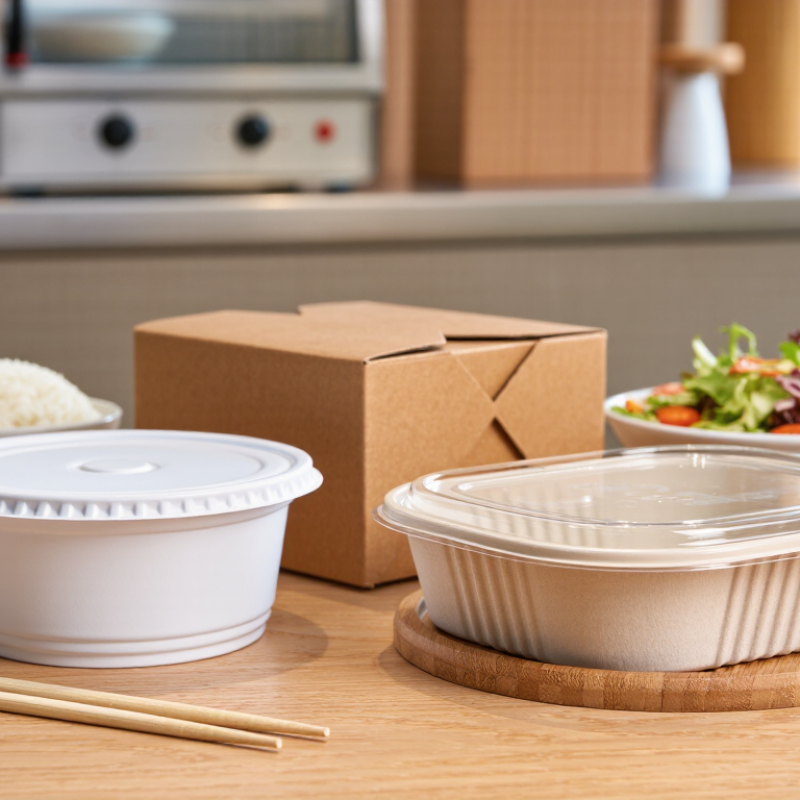
What Are the Best Paper Takeaway Containers in China?

What Are Paper Takeaway Containers?

Paper takeaway containers are food-service packages made mainly from paperboard or molded fiber. They hold meals such as noodles, rice, salads, pastries, and fried foods during transport. Unlike thin paper bags, they have shaped walls, folded seams, or fitted lids to help contain food. Some are uncoated; others use a thin barrier layer to resist oil, water, or heat. That layer matters. Without it, hot curry may soften the base, while oily food can leave visible marks. Paper is not automatically compostable or recyclable. Construction and local waste facilities affect the correct disposal route.

When comparing options in China, look beyond appearance. Ask for material details, an intended temperature range, and confirmation that the package suits direct food contact. Test it with the actual menu: a dry bun behaves differently from steaming soup. Check whether the lid stays closed during delivery and whether steam needs an outlet. Small details count. A snug lid can reduce spills, but may trap steam and soften crisp food. Also consider stacking strength, portion size, and storage space. Paper containers can be practical and light, yet they are not perfect. Moisture barriers may complicate recycling, and performance can vary between batches. Ask for test records, not just a polished sample.

Paper Takeaway Containers: Typical Capacities in China

Representative nominal capacities for common paper food-container formats.

These are illustrative, commonly offered sizes—not a national standard or a brand comparison. Actual capacity varies by supplier and design. For soups or saucy foods, choose a leak-resistant, food-contact-suitable lining; for meals with separate components, a compartment box may be more practical.

What Types of Paper Takeaway Containers Are Available in China?

China’s takeaway market includes several practical paper container types. Folding paperboard cartons suit rice meals, noodles, and dry snacks. Many have a barrier layer, so check how they handle oil and steam. Paper bowls work well for soups and saucy dishes, but lid fit and seam strength matter. Molded-fiber containers, often made from bagasse, feel sturdy and suit combo meals. Corrugated paper boxes offer extra protection for larger delivery orders. Compartment trays keep side dishes apart, though small sections can restrict portions.

Material names alone are not enough. Ask suppliers for food-contact documentation, temperature limits, and coating details. Test samples with the actual menu. Hot rice can soften a base, while chili oil may seep through weak seams. A lid that fits before filling may loosen as steam builds. There is no perfect option; a stronger moisture barrier can affect how easily a container breaks down after use. That trade-off deserves a closer look.

Tips: Match the container to the food, not just its price. Check a filled sample after a realistic delivery time. Press the corners, tilt a bowl, and inspect for leaks. Small tests can prevent messy surprises.

Which Materials and Coatings Are Used in Paper Food Containers?

Paper takeaway containers are commonly made from paperboard, kraft paper, or molded plant fiber such as bagasse. Paperboard provides a smooth surface and firm walls, while molded fiber often has a rougher, less uniform texture. Neither material is leakproof by itself. Small details matter.

Coatings help control moisture and grease. A polyethylene lining can provide a strong barrier, but it adds plastic to the package. Polylactic acid, or PLA, is plant-based and may suit some applications, though heat performance and disposal options depend on the product and local facilities. Water-based dispersion coatings can offer a thinner barrier; their resistance varies by formulation. “Compostable” is not a universal promise. Check the actual product claims and available processing conditions.

Match the container to the food. A dry pastry needs less protection than oily noodles or a meal with hot sauce. For wet foods, inspect the seams, corners, and lid fit, not just the coating description. Ask suppliers for food-contact documentation and test samples with the intended food at serving temperature. That sounds simple, but real meals can expose weak spots that a quick desk review misses. A coating can also affect how the container handles heat, so confirm use instructions rather than assuming.

What Food-Safety and Packaging Standards Apply in China?

For takeaway paper containers in China, food-contact compliance starts with GB 4806.8-2022, the national standard for paper and paperboard materials and articles intended for food contact. It works alongside GB 4806.1, which sets general safety requirements. Depending on the container’s materials, GB 9685 and relevant GB 31604 test methods may also apply. Testing should reflect real use: hot soup, oily noodles, contact time, and temperature can affect migration results. Small details matter. A plain-looking bowl may also contain a barrier coating, adhesive, or printing near the rim, so assess the full construction, not just the paper.

China Paper Association’s 2023 annual report recorded 144.05 million tonnes of paper and paperboard production, showing the scale of the material supply chain. That figure is not a food-safety measure. Buyers still need product-specific evidence, such as test reports covering applicable migration limits, sensory checks, and the intended food types and temperatures. Ask for batch traceability and confirm that reports match the exact container structure. A test on an uncoated sample may not represent a coated bowl. One practical gap remains: paperwork can look complete while leaving actual-use conditions unclear, so specifications should state them plainly.

What Are the Best Paper Takeaway Containers in China? — Food-Safety and Packaging Standards
Container Type Typical Use Practical Strengths Key Checks Before Use General Suitability
Uncoated paperboard box Dry foods, bakery items, and foods with limited surface moisture or grease Simple material structure; easy to print and fold; avoids a plastic lining Check that the paperboard is suitable for food contact and that inks, adhesives, and any recycled-fibre components are appropriately controlled. It may soften or leak with wet, oily, or hot foods. Best for dry or relatively low-moisture foods, subject to the supplier’s declared conditions of use.
Paperboard with a plastic lining Soups, sauces, greasy meals, and foods requiring improved leak resistance Better resistance to moisture and grease than uncoated board Identify the lining material and confirm compliance for the intended food type, temperature, and contact time. Paper and plastic components may each require applicable food-contact compliance assessment. Often more practical for wet or oily meals when validated for the actual use conditions.
Moulded-fibre container Meal trays, bowls, and clamshell containers Rigid, shapeable structure; may be made from plant fibres or recycled paper fibres Check the full formulation, including any barrier coating, wet-strength agent, ink, or release agent. Do not assume that plant-based or compostable claims demonstrate food-contact compliance. Can suit takeaway meals when its food-contact safety and performance are documented for the intended use.
Grease-resistant paper or paperboard Fried foods, pastries, and other oily foods Designed to reduce oil penetration and staining Ask how grease resistance is achieved and request supporting food-contact documentation. Verify suitability for hot foods and the expected contact duration. Useful for oily foods when the treated material meets applicable requirements.
Multi-layer paper container Foods needing a combination of strength, moisture resistance, and barrier performance Can combine paperboard with polymer, foil, or other functional layers Confirm the composition of every food-contact layer and assess the finished article, including seams and closures. Applicable requirements depend on the materials used. Potentially suitable for demanding uses, but the full construction and conditions of use must be verified.
Key Food-Contact Standards and Compliance Checks in China
GB 4806.8-2022 National Food Safety Standard: Paper and Paperboard Materials and Articles for Food Contact. It sets requirements for food-contact paper and paperboard. Check the standard’s applicable requirements and the supplier’s conformity evidence for the material and intended use. This standard took effect on April 1, 2023. Core reference for paper and paperboard food-contact components.
GB 4806.1-2016 National Food Safety Standard: General Safety Requirements for Food-Contact Materials and Articles. Use alongside the relevant material-specific standard; consider intended use, traceability, and information supplied with the product. General requirements applying across food-contact materials and articles.
GB 9685-2016 National Food Safety Standard: Standard for the Use of Additives in Food-Contact Materials and Articles. Relevant where substances are used as additives in food-contact materials. Verify that the use and conditions comply with the standard. Relevant to formulations and components such as coatings, inks, and other additives, according to their use.
GB 4806.7-2023 National Food Safety Standard for Plastic Materials and Articles for Food Contact. Relevant to plastic linings and other plastic food-contact parts. The standard took effect on September 6, 2024. Check for lined paper containers or other plastic food-contact components.
GB 4806.13-2023 National Food Safety Standard for Composite Materials and Articles for Food Contact. Assess applicability to composite structures; also identify and assess the individual material layers under the relevant requirements. The standard took effect on September 6, 2024. Relevant to some multi-material or laminated packaging constructions.
GB 31604 series National food-safety standards covering test methods for food-contact materials and articles, including migration testing methods. Testing should use the applicable current method and conditions that reflect the intended food type, temperature, and contact time. Supports verification and testing; the appropriate method depends on the material and test purpose.
Procurement note: There is no single “best” paper container for every takeaway food. Select by food type, temperature, contact time, leakage and grease-resistance needs, then request current conformity documents and test evidence for the finished article. Applicable standards and test conditions depend on the complete packaging structure and its intended use.

How to Evaluate Paper Takeaway Containers for Different Uses?

Choosing paper takeaway containers in China starts with the food, not the catalogue photo. A shallow box may suit fried rice, while soup needs a deeper bowl with a secure, well-fitting lid. Check the seams. Then test the container with food at serving temperature. Steam can soften paper, and oil may seep through a coating that looks perfectly smooth.

For hot, wet dishes, assess leak resistance and stiffness after several minutes of use. For fried foods, consider grease resistance and whether trapped steam makes the food soggy. Small details matter. Press the lid gently, tilt a filled sample over a sink, and stack several containers to check whether they slide or buckle. A container that performs well for noodles may still sag under oily rice. There is no universal winner.

Size the container for a real portion, not just its listed capacity. Ask suppliers for current food-contact documentation relevant to your market, and compare samples from the production batch you may order. A polished sample alone is not enough. Also check how the containers fit delivery bags and whether staff can close them quickly during a busy service. Some compromises remain: stronger barriers can affect recyclability, and lighter designs may lose rigidity. The right choice depends on the menu, delivery time, and handling conditions.